

“The Information is out there; you just got to let it in.” Part-7
THIS is now the seventh time I’ve referenced this quote in my comments. I said last time I had a feeling I may do it one more time, and well… here it is.
I recently viewed an on-line interview with a noted scholar/commentator who – at least in my estimation – often speaks with deep knowledge, understanding and wisdom on important topics. It was interesting for me to observe the interviewer’s recognition of this fact, pausing off topic in the middle of the conversation to ask, “How did you come to acquire such wisdom on so many matters?” It caught the interviewee up short as he paused as to the question itself. After a moment of awkward silence, he began to describe wisdom as “discernment,” and went about explaining as best he could what it is and how it is acquired. I couldn’t help but wonder at his gracious response and answer, taking my thoughts back to my days a CCA (Covenant Christ Academy), and the daily references to the Proverbs and the many Character Training lessons offered up to the students. It also brought me to James 1:5:
If any of you lacks wisdom, let him ask of God, who gives to all liberally and without reproach, and it will be given to him.
How does one acquire wisdom? If someone were to ask you that question — well, would it be 1) because it is something observable in you; and 2) how would you answer that question? Again:
“The Information is out there; you just got to let it in.”
And again, therein resides problem. How much time do you devote to acquiring godly wisdom and discernment, and how does one go about it? I’m going to attempt to address the last part of that question next time. But, bottom-line, if we are to put on Christ who is the Personification of Wisdom (Proverbs 8), and as James, who knew Christ like no-other, ...makes it a first-things-first priority, should the acquisition of wisdom not be high on our daily agenda as well?
Wisdom is the principal thing;
Therefore get wisdom.
And in all your getting, get understanding.
All this came to mind as I was reading another entry titled “Guarding the Tongue,” from Mindful Christianity. In view of all the hurtful words in the battle of words deeply infecting and affecting our current culture, this is truly a worthwhile consideration. In this reflection on Proverbs 21:23, we’re reminded that words are never neutral. They carry weight. With every sentence, we hold the power to heal or harm, to build up or tear down. This piece invites us to slow down, weigh our words carefully, and let our speech flow from a heart shaped by grace.
SO, with that, here is another short but to-the-point piece titled “Guarding the Tongue” from Mindful Christianity.
In the inexorable riches of Christ,
Joe
Neh. 8:10; Isa 30:15; Job 2:10; Jas. 1:2; Prov. 21:30
*************
Guarding the Tongue
“Those who guard their lips preserve their lives, but those who speak rashly will come to ruin.”
Proverbs 21:23
Words are powerful. They can build up or tear down, heal or wound, encourage or destroy. Scripture tells us again and again that the tongue holds the power of life and death. That is why guarding our words is one of the holiest disciplines we can practice.
It is so easy to speak quickly in frustration, in gossip, in complaint. But once words are spoken, they cannot be taken back. They leave marks on our hearts, for good or for harm.
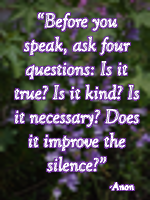
Guarding the tongue does not mean silence all the time, but it does mean slowing down. It means asking, is what I’m about to say true? Is it kind? Is it necessary? Will it build up or tear down?
When we begin to guard our words, our relationships change. Peace replaces conflict. Trust replaces suspicion. Encouragement replaces criticism.
Jesus reminds us that what comes out of our mouth reflects what’s in our hearts. So, guarding our tongues is not just about speech. It’s about allowing God to purify our hearts. So that what flows out of them is life-giving.
Today, may your words be few, thoughtful, and filled with grace

