

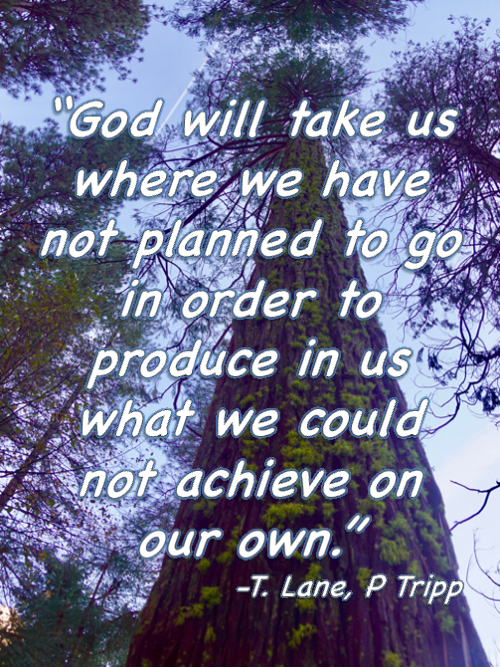
IT has become my habit to take particular note of, and occasionally journal, what I’ve come to term – “little providences.” We often think in terms of seeing the “Big Picture” in God’s providence, his ordering the grand scheme of world events to His final purpose. But being alert to and observing the invisible hand in the little providential events that surround us, help us appreciation each encounter with God’s providence towards understanding how “all things,” big and small, good or bad, are indeed working in concert for good. (Rom 8:28)
IN light of this, Proverbs 21:30 often surfaces in my collective thoughts, seeing the many threads weaved together that make-up the tapestry of our lives.
“There is no wisdom or understanding, or counsel against the LORD.” (Prov 21:30)
THIS train of thought surfaced again this week after posting last Sunday’s review of Westminster Shorter Catechism Q103, “…third petition, which is, Thy will be done in earth, as it is in heaven, we pray.” Almost immediately after that posting came my devotional reading in J.R. Miller’s Morning Thoughts (posted below), resulting in another encounter with that question, reminding me again of the blessings derived in observing “little providential” events when they occur. In addition, this JRM reading is also on target with much of my recent personal musings regarding Desirable Difficulties and the blessings of adversity.
DRAWING from Matthew 6:10, Miller challenges us to truly embrace God’s will—not just in suffering, but in active obedience. It calls us to pray not only for others, but for ourselves—ready to follow His will with quiet trust, whether in joy or in sorrow.
WELL, with that said, let’s consider another musing from JR Miller’s Morning Thoughts tiled Unquestioning Obedience, taking another look at “Thy will be done.”
In the inexorable riches of Christ,
Joe
Neh. 8:10; Isa 30:15; Job 2:10; Jas. 1:2; Prov. 21:30
**************
Unquestioning Obedience
“May Your will be done in earth, as it is in Heaven.” Matthew 6:10
Some people quote this petition always as if it meant only submission to some painful providence. They suppose it refers only to losing friends or money, or to adversity or calamity. But it is for the doing of God’s will — not the suffering of it, that we here pray.
It is easier, however, to make prayers like this for other people than for ourselves. We all think others ought to do God’s will, and we do not find it a difficult prayer to make that they may do so. If, however, we offer this prayer sincerely, it is for ourselves — that we may do God’s will. We can pray it, therefore, only when we are ready for implicit, unquestioning obedience. Or it may mean . . .
the giving up of some sweet joy,
the losing of some precious friend,
the sacrifice of some dear presence, or
the going in some way of thorns and tears.
We should learn always to make the prayer, and then to hold our life close to the divine will, never rebelling or murmuring — but sweetly doing or bearing what God gives us to do or bear.

